
For years, Miami has dominated conversations around digital infrastructure in Florida.
The city became one of the most important connectivity hubs in the Western Hemisphere thanks to its concentration of carriers, subsea cable landings, and proximity to Latin America. For companies expanding internationally, Miami often became the default choice for data center deployments and interconnection.
But the way companies think about deployment strategy is starting to evolve.
As cloud platforms, AI workloads, and real-time applications continue expanding, companies are reevaluating where infrastructure should actually live and whether traditional hub markets always make the most sense.
Increasingly, Orlando is entering that conversation.
How Orlando Became Part of the Infrastructure Discussion
The shift reflects a broader trend happening across the infrastructure industry. Rather than concentrating everything inside a handful of major metro markets, companies are moving infrastructure closer to regional population centers and emerging business corridors.
In Florida, Orlando is becoming difficult to ignore.
The metro area recently ranked as the fastest-growing major metro region in the United States across job growth, population growth, and GDP growth. Businesses, residents, and technology investment continue flowing into the region at a rapid pace, transforming Orlando into more than just a tourism-driven economy.
For data center providers and enterprise operators, that growth creates practical advantages.
Companies serving users across Florida and the Southeast can often deliver lower regional latency from Central Florida than from the southern edge of the state. Orlando also offers more room for long-term expansion compared to denser infrastructure markets where space, power availability, and operating costs continue tightening.
That does not diminish Miami’s importance. Miami remains a critical international gateway, particularly for traffic moving between North and Latin America.
Why Orlando Data Centers Are Becoming More Connected
The conversation is becoming less about choosing a single dominant hub and more about building infrastructure in locations aligned with actual user distribution, application performance requirements, and long-term scalability.
In many cases, companies operating in Central Florida no longer need to place infrastructure directly in Miami to maintain access to major connectivity ecosystems. High-capacity transport links now allow regional markets like Orlando to stay tightly connected to larger hubs while operating closer to local users and businesses.
That evolution is changing how companies think about data center placement.
Why HostDime Continues Expanding in Orlando
HostDime was founded in Orlando in 2003, long before the region became part of larger infrastructure conversations.
Over the past two decades, Orlando has evolved into one of the fastest-growing technology and business markets in the Southeast, and HostDime has continued expanding alongside it.
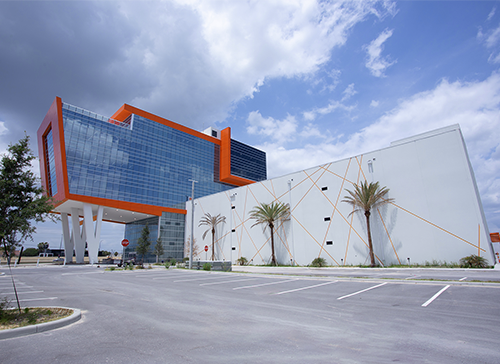
Today, HostDime’s new Orlando data center campus supports enterprise infrastructure deployments across Florida and the Southeast with direct access to major carriers, cloud providers, and interconnection ecosystems.
HostDime also operates a dedicated dark fiber connection between Orlando and Miami. That allows clients in Orlando to connect directly into the NAP of the Americas and the broader South Florida carrier ecosystem without needing to physically deploy infrastructure in Miami itself.
For many organizations, that creates a balance between regional performance, scalability, and access to one of the world’s largest connectivity hubs.
Orlando is no longer being viewed as a secondary data center market. Increasingly, it is becoming part of Florida’s next phase of digital growth.