
Data center water usage has become a growing concern for communities where new infrastructure is being built. As more AI, cloud, streaming, and enterprise workloads move into data centers, people want to understand what that growth means for the places they live. How much power will it use? How much water will it use? What does responsible growth actually look like?
When it comes to water, the conversation often gets flattened into one assumption: data centers use massive amounts of water. Some do. Some don’t. The difference comes down to how they are designed.
Water Withdrawal vs. Water Consumption
To understand how data centers actually affect local water supplies, it helps to understand the difference between water withdrawal and water consumption.
Water withdrawal is the amount of water taken from a source, such as a municipal system. Water consumption is the portion that is actually used up and not returned, typically through evaporation. A system can move large amounts of water through it without consuming much of it, and what impacts local water supply long-term is consumption.
When people hear that data centers “use water,” they are usually thinking about consumption. But not every cooling system is designed to consume water in the same way.
Why Data Centers Use Water
Servers generate a ton of heat, and every application, transaction, and workload runs on physical infrastructure that must stay within safe operating temperatures. If cooling fails, performance drops, hardware can be damaged, and critical services can be disrupted.
Water is often used because it is an efficient way to transfer heat. Many large data centers rely on evaporative cooling systems, where water absorbs heat and then evaporates as part of the heat rejection process. That design can be efficient from an energy standpoint, but it also means water is continuously consumed during normal operation. That is where most of the headlines come from.
Not All Cooling Systems Use Water the Same Way
Cooling design is where the real difference happens. Some data centers use evaporative cooling, where water is intentionally lost through evaporation every day as part of normal operation. In large deployments, that can add up to millions of gallons per year. Others use reclaimed or non-potable water to reduce strain on drinking water supplies, or liquid and immersion cooling for high-density workloads.
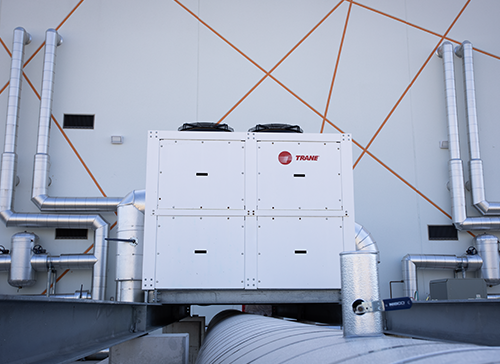
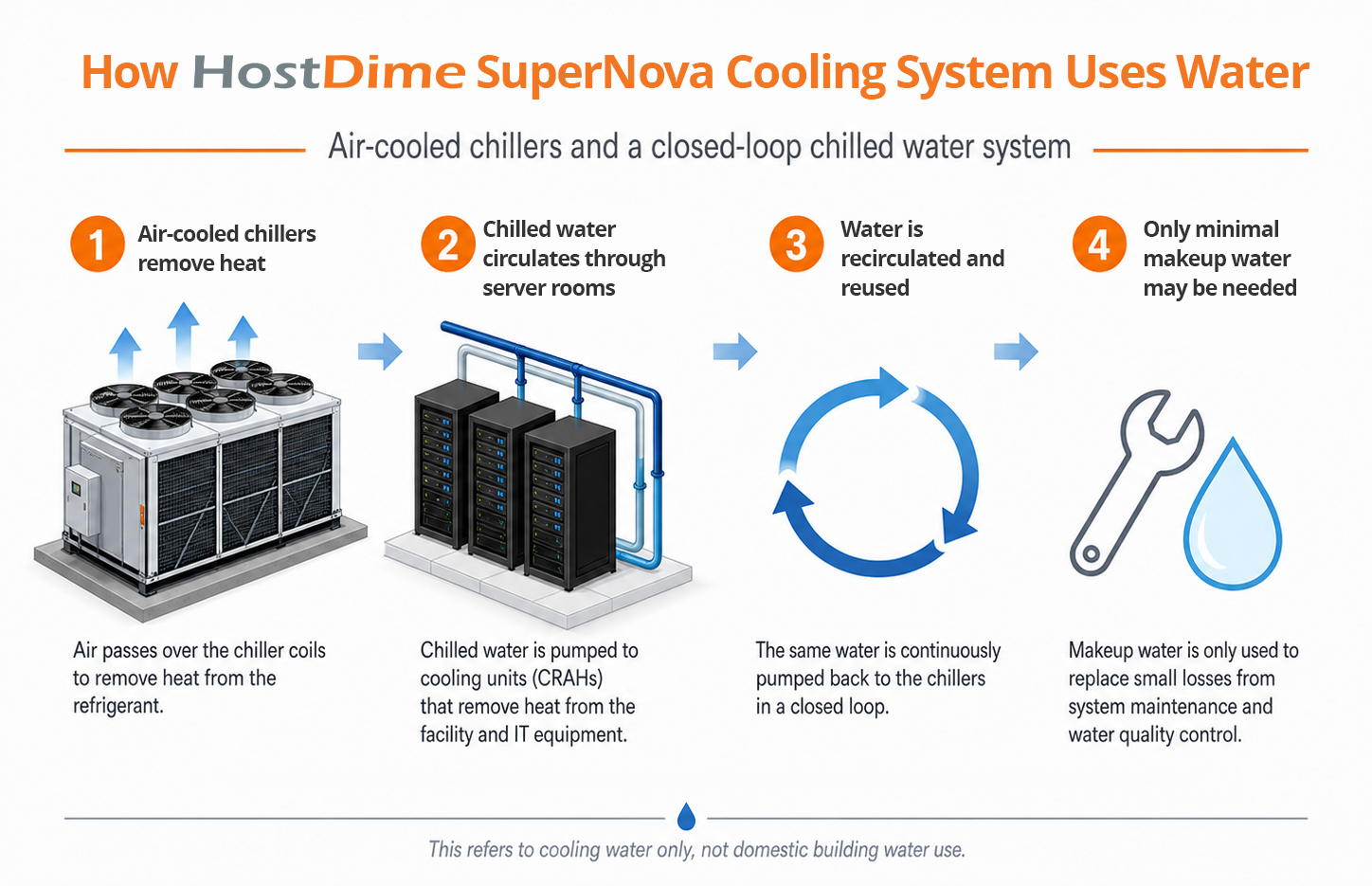
And some, like HostDime’s upcoming SuperNova facility, use air-cooled chillers connected to closed-loop chilled water systems. In a closed-loop system, water circulates through piping and heat exchangers without being intentionally evaporated. Once the system is filled, the same water is reused continuously. Makeup water may be needed over time, but only in small amounts for maintenance, leaks, or system servicing.
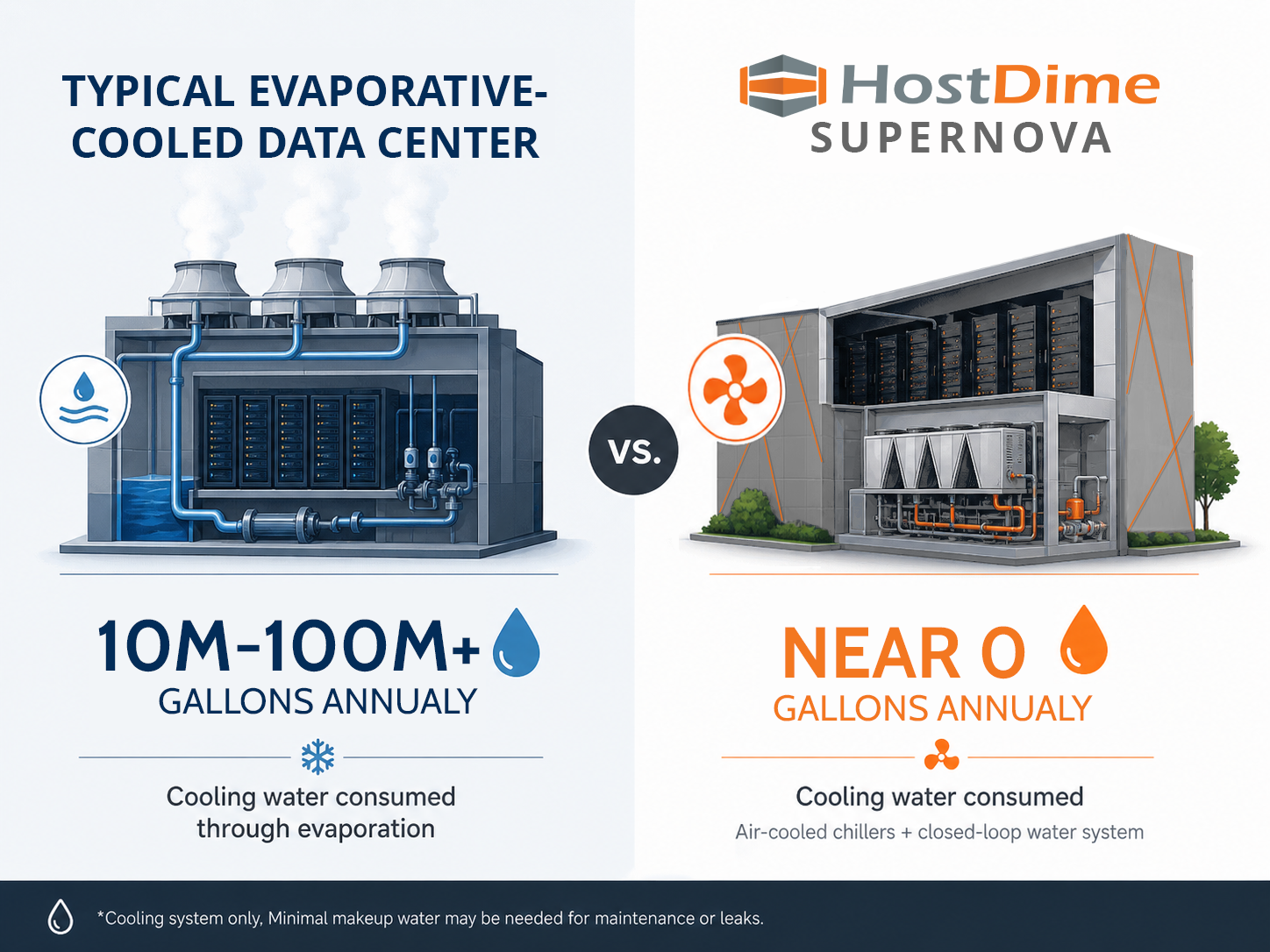
The result is a fundamentally different water profile. Some facilities can consume millions of gallons each year, while others are designed to consume virtually none for cooling.
HostDime’s Approach to Data Center Water Usage
HostDime’s SuperNova data center in Central Florida was designed with this distinction in mind. The facility uses air-cooled chillers connected to a closed-loop chilled water system. Instead of relying on evaporative cooling towers, heat is rejected through air-cooled equipment, while chilled water circulates internally to cool the IT environment.
Once the system is filled, that water remains in circulation. It is not consumed during normal operation. Ongoing water use is limited to minimal makeup water for maintenance, leaks, or service-related adjustments.
As part of this purpose-built data center design, the system includes approximately 2,750 gallons of water storage distributed across three closed-loop tanks, one per chiller. This design allows the system to continue circulating chilled water during a power outage. With pumps supported by backup power, the stored water helps maintain cooling to the server rooms even if primary systems are interrupted.
So the question is not simply whether a data center uses water, but whether that water is being consumed or recirculated. For SuperNova, the cooling system is designed to recirculate water rather than continuously lose it through evaporation.
Why This Matters for Central Florida
The Orlando area is the fastest growing metro area in the United States. More people are moving here, more businesses are expanding, and more digital services need to be delivered locally. That growth requires infrastructure, and that infrastructure needs to be designed responsibly. Communities should understand not just what is being built, but how it operates and what impact it has on shared resources. Water is a meaningful part of that conversation.
A data center that consumes millions of gallons per year for cooling presents a very different profile than one built around a closed-loop, air-cooled system. They may look similar from the outside, but their long-term impact on local water resources is not the same.
Cooling Design is the Answer
Every piece of infrastructure carries some footprint, and HostDime isn’t claiming otherwise. What SuperNova reflects is a deliberate choice to design systems that minimize water consumption from the start, not as an afterthought, but as a core engineering decision. In a region where water resources and community trust both matter, that choice is part of what it means to build responsibly.